Season by season
January–February
Deep winter: short daylight, cold and often wet, with the city better suited to museums, galleries and clubs than long outdoor days. February can be notably busier during the Berlinale.
Grey weather and limited daylight are real constraints; Berlinale dates bring scarce, pricier rooms and a busier central city.
March–April
An unsettled early spring shoulder season: days lengthen and the city starts to feel more outdoors-oriented, but temperatures and rain remain unpredictable.
Do not plan around reliably warm terrace weather; bring layers and a rainproof outer layer. The 1 May period can disrupt parts of Kreuzberg and Friedrichshain.
May–June
One of Berlin’s best windows: generally mild weather, long days and a lively outdoor-drinking, park and cycling season. It is popular, especially around long weekends and Pentecost.
Higher demand and crowds are the price of the good weather. Carnival of Cultures around Pentecost materially affects accommodation demand and movement in its areas.
July–August
High summer brings the longest days, outdoor events and a busy visitor city, but heatwaves are possible. Many older hotels and apartments lack effective air conditioning.
It can be hot, crowded and uncomfortable indoors; reserve well ahead around Christopher Street Day and major summer weekends.
September–October
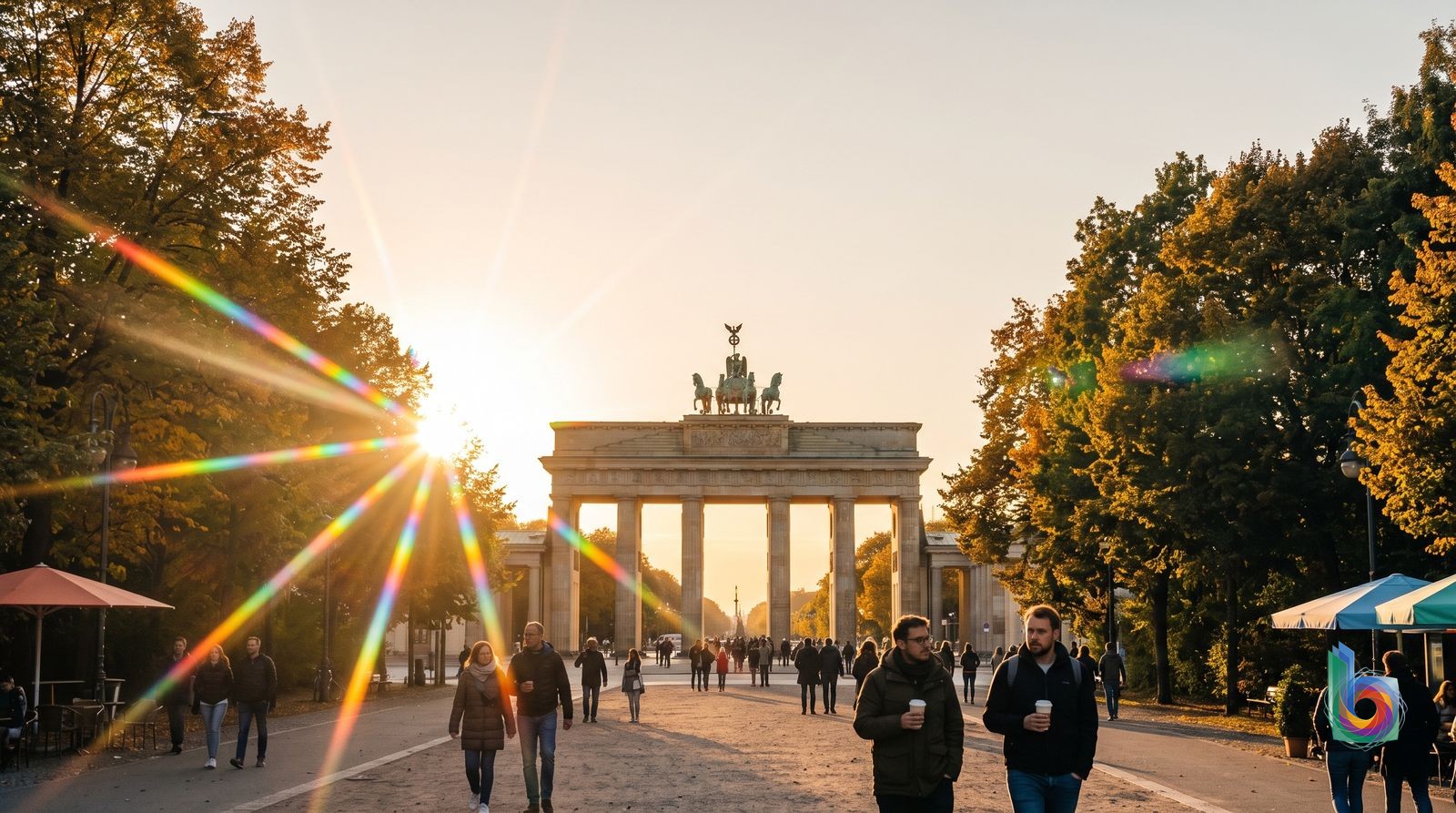
The other top compromise season: often mild enough for extensive walking and outdoor eating, with autumn colour and less oppressive heat than midsummer. September remains popular.
Demand remains high in September, and October weather can turn cool and wet quickly. Book timed headline sights rather than assuming shoulder-season walk-up access.
November–December
Late autumn and winter are dark, cold and frequently wet, but December’s Christmas markets create a particularly atmospheric reason to visit.
Very short days limit outdoor sightseeing, while the Christmas-market period raises room demand and crowds despite the winter weather.
Events worth planning around
Berlin International Film Festival (Berlinale) · Usually February
A major citywide demand spike: book accommodation early, particularly in central districts. Film venues and festival activity make parts of Mitte and Potsdamer Platz busier than usual.
May Day protests and street parties · 30 April night and 1 May
Kreuzberg and Friedrichshain can be crowded and subject to altered transport and policing. Avoid hotspots around Oranienstraße/Mariannenplatz, Boxhagener Platz and Rigaer Straße unless the protest-and-party atmosphere is the point of the visit.
Carnival of Cultures (Karneval der Kulturen) · Around Pentecost, usually late May or June
The parade and associated programme draw large crowds and increase demand for rooms; expect busy streets and slower movement around event areas. Check the year’s exact Pentecost dates before booking.
Christopher Street Day (Berlin Pride) · Summer, typically July
The parade weekend brings major crowds, road closures and higher demand for central accommodation. Reserve restaurants and key timed attractions in advance if visiting that weekend.
Berlin Christmas-market season · Late November through December
Markets make winter more appealing but concentrate visitors in central and neighbourhood market areas. Weekend accommodation and restaurant reservations can be tighter than the weather alone suggests.
Getting around
U-Bahn, S-Bahn and regional rail
The default for crossing Berlin efficiently: use it between Historic Mitte, Alexanderplatz, City West, Kreuzberg, Friedrichshain and major rail hubs. U-Bahn is particularly dense in the west; S-Bahn is excellent for longer hops and ring connections.
Use the BVG journey planner and the shared Berlin zone-ticket system. Central Berlin is generally AB; BER and Potsdam require ABC. Validate paper tickets where required before travel.
Do not assume the nearest-looking station makes every district equally easy. Tempelhof, Moabit away from Hauptbahnhof, and outer residential parts of Neukölln still involve walks or a bus connection; late at night, check the planner rather than relying on daytime frequencies.
Tram
The most useful surface transport in the former East: excellent for Prenzlauer Berg, Alexanderplatz, Friedrichshain and routes toward Mitte. It is often the pleasantest way to cover distances too long to walk within those neighborhoods.
Trams use the same tickets as U-Bahn and S-Bahn. Board with a valid ticket and use the BVG planner for the right stop; they are especially handy from Prenzlauer Berg when the U2 is not directly where you need it.
The network thins sharply in western districts. Do not plan a City West, Schöneberg or much of Kreuzberg itinerary around trams; use the U-Bahn, S-Bahn or bus instead.
Bus
Filling the gaps: Moabit beyond Hauptbahnhof, parts of Tempelhof, and places where a station is not at the door. It is also useful for short connections when walking between U-Bahn and S-Bahn lines would be awkward.
Use the same transit ticket as rail and tram, and check live routing in the BVG planner. Give yourself extra time for a first transfer at the vertically layered Hauptbahnhof.
Traffic makes buses less predictable than rail, especially around Alexanderplatz, central sightseeing streets and major shopping areas. They are a practical connector, not the fastest default for crossing town.
Walking
Exploring within a kiez rather than attempting to walk all of Berlin: Historic Mitte’s main sights, Museum Island to Brandenburg Gate, Kreuzberg’s canal and food streets, Friedrichshain around Boxhagener Platz, and Prenzlauer Berg’s café streets reward being on foot.
Combine walks with transit. Museum Island, Unter den Linden and the Brandenburg Gate area are naturally walkable, while Alexanderplatz is about a 15–20 minute walk from Museum Island.
Berlin is flat, so hills are not the issue; scale is. Kreuzberg, Prenzlauer Berg, Schöneberg, City West and Tempelhof are each walkable internally but are not sensible walks to every landmark. Tempelhofer Feld itself is vast and exposed in poor weather. Keep out of marked cycle lanes.
Bicycle
A good fair-weather option for confident riders wanting to move between nearby inner neighborhoods or cover the long paths of Tempelhofer Feld. Berlin’s flat terrain makes cycling physically easy.
Use a reputable rental or bike-share option and plan routes that suit your confidence level. Treat cycle lanes as active traffic space and lock any hired bike as instructed.
It is not the easiest choice for first-time visitors in busy central areas, around Alexanderplatz or near Warschauer Straße, where traffic, pedestrians and unfamiliar junctions add stress. Rain, winter weather and late-night riding reduce its appeal.
Taxi and ride-hailing
Late-night door-to-door journeys, heavy luggage, mobility needs, or trips to accommodation in a station gap—particularly in Moabit, Tempelhof or outer Neukölln after a long day.
Use a licensed taxi or established ride-hailing app; treat it as a targeted convenience rather than everyday transport. From BER, rail is normally the far better-value central-city choice.
Traffic can make a car slower than rail, and fares add up quickly. It is a weak choice for routine trips between the central districts and no substitute for public transport after big events or in congested nightlife areas.
Safety: Berlin is generally safe, but keep bags close on crowded trains and around Hauptbahnhof or Warschauer Straße at night, and look both ways before stepping into a cycle lane.
Book before you land
Reichstag glass dome — free, but advance registration and a timed slot are required; book as soon as dates are firm. · Berlin TV Tower (Fernsehturm) — reserve a timed entry in advance for a specific sunset or weekend slot. · Popular Museum Island timed entries, especially the Neues Museum — book several days ahead in busy periods; do not assume a museum pass guarantees immediate admission. · Major temporary exhibitions and limited-capacity guided tours — reserve ahead once you know your dates, particularly on weekends and school holidays. · Sanssouci Palace in Potsdam — reserve a timed palace entry before making the day trip in peak season.
- Carry a contactless card, but keep some cash: Berlin is better than it was, not universally card-first, especially in smaller bars, kiosks and markets.
- Validate paper transit tickets where required and buy the correct zones before boarding. BER and Potsdam require ABC; central Berlin is generally AB. Ticket inspectors are routine, and the cited penalty for an invalid airport ticket is €60.
- Do not walk in bike lanes. Berlin cyclists move fast, and the lanes can be easy to mistake for extra pavement.
- Pickpocketing is the real visitor risk: keep bags close on crowded trains and at major stations, especially Hauptbahnhof and Warschauer Straße at night. Berlin is otherwise comparatively safe for a big city.
- Checkpoint Charlie is a photo stop, not the place to learn the Wall’s history. Go instead to the Berlin Wall Memorial at Bernauer Straße; the East Side Gallery is worthwhile but heavily touristed.
- On the night before and evening of 1 May, avoid the Kreuzberg/Friedrichshain protest and party hotspots around Oranienstraße/Mariannenplatz, Boxhagener Platz and Rigaer Straße if you do not specifically want that atmosphere.
Worth leaving the city for
Potsdam and SanssouciFull day. RE1 or S7 takes about 30 minutes from central Berlin, but palace entry, the large park and local connections make this a day-long outing.
This is the clear first choice: Prussian palaces, parkland and a city that is genuinely different from Berlin rather than a diluted suburb. Sanssouci’s landscape and palace ensemble repay a full day; it is better than squeezing in another generic Berlin museum if you have four or more days.
Sachsenhausen Memorial, OranienburgHalf day to most of a day. About 30 minutes by RE or S1 to Oranienburg, plus local transfer/walking and time on site.
One of the few preserved concentration-camp sites on German soil, presented as a place of Nazi terror rather than an easy ‘attraction.’ It adds necessary historical depth after Berlin’s memorials, but it is emotionally demanding and should not be paired with a frivolous itinerary.
SpreewaldFull day. Roughly an hour south by train before local transport and time on the water.
A real escape from Berlin’s hard edges: a protected biosphere of meadows, forest and narrow Spree waterways. Go if you want canoeing, punting or quiet landscape; skip it in bad weather or if you only have a short Berlin stay.
Lutherstadt WittenbergFull day, though the rail ride is short: about 40 minutes by ICE from Berlin, plus station-to-centre time and return timing.
A compact, walkable Reformation town whose Schlosskirche gives the trip a clear historical point. It is a better use of a day for church/Reformation history than for travelers primarily seeking landscape or nightlife.
Chorin Abbey and Brodowin areaMost of a day. About 40 minutes by hourly train, then several kilometres of forest paths/local travel.
For a quieter alternative to headline day trips: an old cloister, occasional concerts, farms and rural Brandenburg scenery. It is not a substitute for Potsdam’s grandeur; choose it for walking and calm.